4th November 2026
Exploring Learning for Sustainability and the Centre for Teaching Excellence – our second ‘LfS Connect’ session for 2026-2027
We were delighted to welcome participants from across Scotland’s educational landscape to the second 2026-2027 session of ‘LfS Connect’ – our monthly online, pan-sectoral and national Community of Practice.
Delivered in partnership by Learning for Sustainability Scotland and the Centre for Teaching Excellence, LfS Connect provides an opportunity for educators, senior leaders, and policy makers across Scotland – and beyond – to discuss, share, and explore key aspects of educational research, policy, and practice relating to Learning for Sustainability.
This session focused on ‘Learning for Sustainability and the Centre for Teaching Excellence’; exploring the work of the Centre to support research-informed support and activities for teachers from all sectors with an interest in LfS.
1. Welcomes and introduction to the work of the Centre for Teaching Excellence
The session opened with a welcome from Kirsten Leask, Project Manager with Learning for Sustainability Scotland, and Dr Claire Ramjan, Hub Lead for the Rural and Learning for Sustainability Hub at the Centre for Teaching Excellence.
Participants were then invited to share their thoughts on the words or phrases they associate with the term ‘educational research’ .
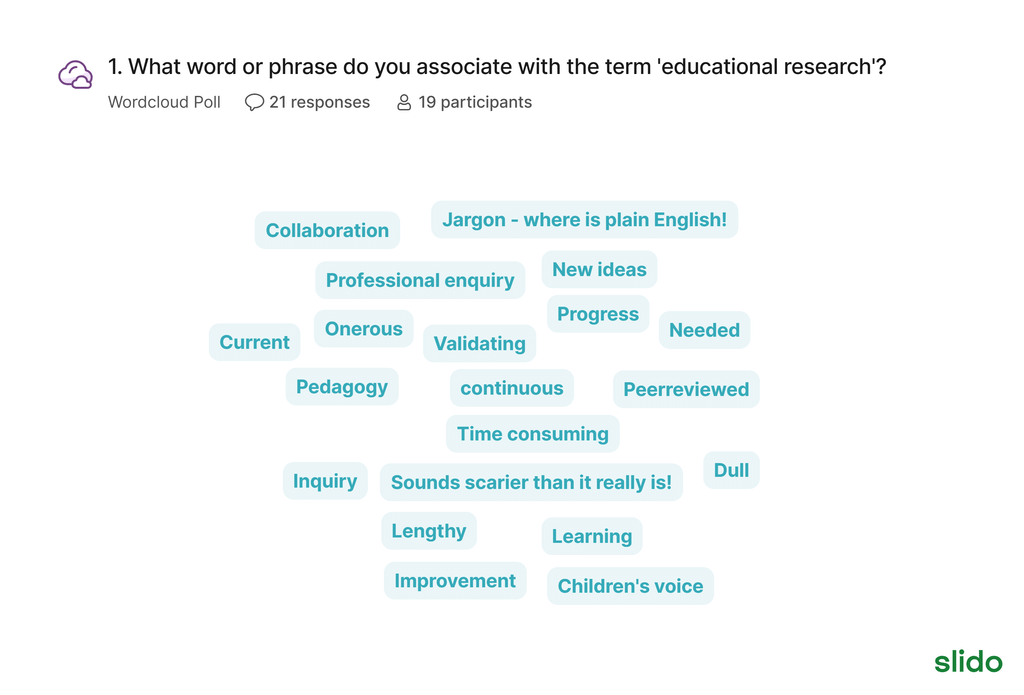
Claire then provided an overview of the work of the Centre for Teaching Excellence.
The Centre is a Scottish Government-funded national body, led by the University of Glasgow, that aims to support teachers, including those in Gaelic Medium Education, to actively lead and engage with research and evidence to help inform and develop their practice.
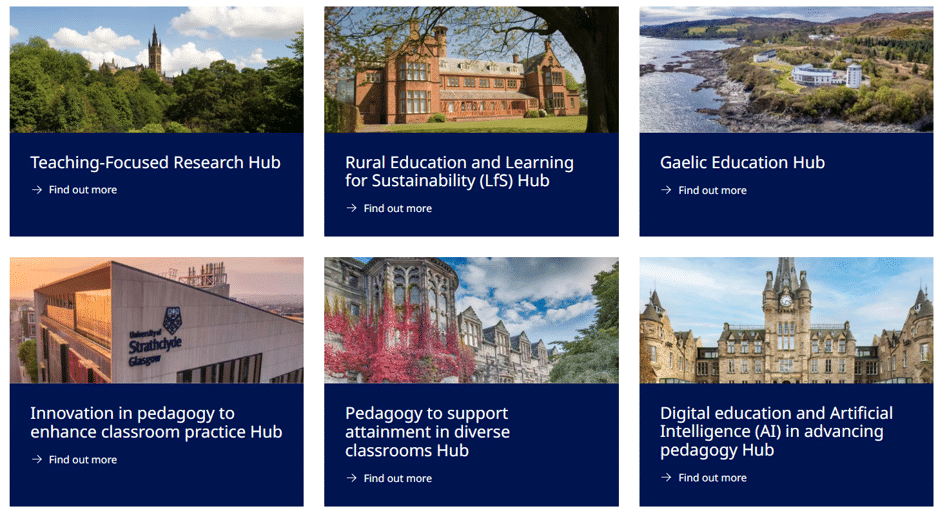
It does this by:
- Working in collaboration with teachers to identify areas of priority.
- Supporting practice-focused research in relation to priorities, for example through practitioner enquiry.
- Sharing of research, evidence and experiences with teachers.
- Gathering national and international evidence, ensuring wide accessibility.
- Establishing partnerships with key stakeholders to enable development of relevant research-practice collaborations.
View a recording for this part of the session
2. Introducing the work of the Teacher Associates
We were then honoured to welcome several of the eight Teacher Associates who are currently seconded to the Learning for Sustainability and Rural Education Hub. Drawn from across Scotland, and reflecting expertise in the primary, secondary, and ASN sectors, their role is to bridge research and practice.
View a recording of this part of the session.
3. Over to you: group discussions
Participants then went into breakout groups to share their thoughts on three questions:
1. What opportunities do you have within working hours to engage with educational research (in relation to LfS or other topics)?
2. What support would you find valuable to help you engage with educational research (LfS specifically)?
3. How can educational research and professional learning compliment each other?
Click here to view the Padlet where they shared their thoughts.
4. Participant reflections
The session concluded with reflections from participants on two questions:
1. What did you find most useful about today’s session?
2. How can we further support you in the future?
Read some of their reflections here.
Our warmest thanks once again goes to all of the Teacher Associates who shared more about their work at the Centre for Teaching Exellence, and to everyone who joined us and shared their perspectives, questions and ideas.
We look forward to continuing the conversation through LfS Connect.
Join the next ‘LfS Connect’ session on Tuesday 08 December
Our next LfS Connect session will comprise ‘LfS : A Conversation’ and will have a focus on place-based approaches to Learning for Sustainability; with input from educators from across Scotland.
Book your FREE place for this session
View and book places for all of the upcoming LfS Connect sessions for 2026-2027